|
Originally posted by BlackMagic
Actually I'm pretty sure this is not going to be his daily driver. So I'm guessing he wants all the power up top where he can use it at the strip.
Bingo. Only, not so much strip, but stage.
Originally posted by turbo8u
make it out of stainless
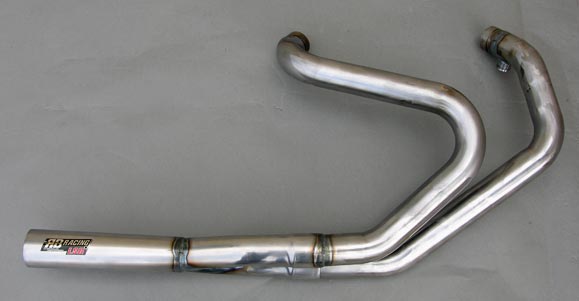
Heh. Eventually, but mild steel keeps prototyping costs down, bro. So long as the design is clean and the welds are tight inside and out, I'll be happy with it.
Originally posted by turbo8u
you said though, "something to grow into"...so I don't know. why do you want/need a 3" outlet? you're building it for low-end torque and daily drivability yes?
Something for other people to grow into. I plan on making full use of the high end breathing capabilities of this motor. Daisy's days of creeping through drive-thrus and rush hour traffic are numbered. Sure, she'll get out there from time to time; just for shits and giggles, but she's got other things in store. Back on the stock ECU since last August, I'm fairly familiar with the loss of power below 3500rpm. The next series of projects I want to try on the car are this LTH, C3s, ITBs, and finally weight reduction.
Originally posted by turbo8u
CFM = (CuInDisplacement)x (full load rpm) x efficiency x exhaust gas temp +460) DIVIDED BY 2 x 941760 efficiency is going to something like .85 (85%) to .95 (95%)
Heh. I think you need to double check the syntax on that one, turb.
Ex:
CFM = (<(123*9000*.90*1200)+460>/2)*941760
CFM = <(1,195,560,000+460)/2>*941760
CFM = (1,195,560,460/2)*941760
CFM = 597,780,230*941760
CFM = 562,965,509,404,800
She moves a lot of air, but I doubt she cycles three times the volume of the Earth's atmosphere every minute.
Now, supposing you meant to put parentheses around the last figure in the equation to be 4176, CFM would still come out to be just under half that ridiculous number above.
Of course, maybe you meant everything divided by (941760*2). That would make more sense, as it results in 634.75 (rounded to hundreths).
Originally posted by turbo8u
velocity = CFM/area of piping
Okay. Assuming the last figure was legit (since we're only playing with numbers at this point), velocity = 635/area^P? Shouldn't that be volume? Figure the volume of the header by calculating volume of all four runners plus the merge collector? Further figuring volume of entire exhaust system would allow ideal system paramaters, methinks. Got a target velocity? I don't want to get this deep into the subject although it would be cool to say I did.

en.wikipedia.org/wiki/De_Laval_nozzle#Exhaust_gas_velocity
I was thinking about ordering a book on the subject, but with all the reading I have to do for school, I don't think I'd actually finish it. Besides, a lot of this is hit-or-miss theory, anyway. I'd just like to come up with something that will do more good.
Originally posted by turbo8ufor your naturally ASSpirated motor 
LMAO. Fast is relative, brother. When this bitch is done, she's going to be, and I say this in my best turby impression, siiiiiic.
More research will be done on this subject...
|

 Search
 Printer-friendly copy
 0 Users in Chat





 )
)


 :: exhaust