|
<bangs head on desk>
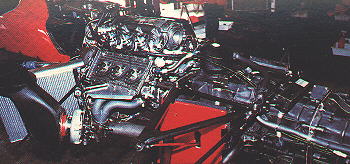
That manifold is awesome. By favoring the wastegate, exhaust gasses have an easier time of bypassing the turbo, which is better for boost control.
Porsche has claimed that the 964 Turbo had a pumping loss of 20HP through the turbo. In other words, it only takes 20HP to spin the compressor and make positive manifold pressure. What happens to the rest of the exhaust?
Much of it goes through the wastegate. This isn't perfect, though, as a wastegate can only pass so much exhaust, so people run bigger exhaust housings. To not do so is to encourage boost creep.
What if your wastegate were able to pass all but 20HP of exhaust? You would be able to run a small exhaust housing, giving you the same amount of power with a bit less lag. This begs the question; why not aim the exhaust at the wastegate?
Before the wastegate opens, a high-pressure area develops in front of the wastegate valve. This high-pressure area is right by the exhaust housing inlet. Being that the housing can be so much smaller, flow isn't really a problem. The turbo will come into boost more quickly, and the WG valve will start to open, closed loop. In other words, it will only open enough to vent enough gas to attain the set boost level.
If space constraints allowed, I would run the wastegate and the turbo almost collinearly. In other words, I would aim the collector right at the wastegate, and then have a branch at a light angle off of that where I would mount the turbo.
This manifold is the first decent (in design, not construction) manifold that I have seen for this platform. The old turbo Formula One cars had a similar setup, actually.
|

 Search
 Printer-friendly copy
 0 Users in Chat