|
Jason, how the hell are ya! Listen, in all reality, everything both of us are saying is true, which is to say the God's truth probably lies some where in the middle! 
I merely strive to place the proper perspective upon it...while the Mapper is not a perfect solution, it would be wrong if folks dismissed it out of hand, as the total number of issues does remain small when compared to the hundreds of units that are trouble free, typically on vehicles with NO other mods or faults to this MAP circuit.
You'll remember, when I informed you of my findings regarding the user-induced variabilities with harness mods and other gizmos, and differences from car to car, that you offered to get back to me with new test results based upon the new information. Of course, you were never able to provide that data due to your car evolving beyond an AFC, but I should think you would not dismiss it either; maybe even share it and embrace it for the amount it was worth (your post above does tone out a bit dismissive towards these findings, just pointing that out, not pissed at you at all). I got the data anyway in my own testing, and this data is the foundation of my entire position regarding correct care and feeding of the Fuel Mapper.
The only other solution was to have folks adjust the unit in the field to suit THEIR particular car and/or combo, but I decided this was too risky...sometimes we are forced to 'dumb it down' to protect peeps from themselves, 'specially if they aint particularly knowledgable about how NOT to blow up their shit!
Anyhoo...just wanted to also mention:
We use neither 'silicone' nor 'zener diodes' in our unit (chuckle). We use dielectric potting compond intended for electronics, and only Motorola transistors (aint a diode in the thang). Since you brought up qualiity (jab!), I'd like to point out that each unit is hand soldered, and calibrated individually using a pressurized (10 PSI) real MAP sensor to a tolerance of plus/minus .05V.
As to boost induced sensor failures...with all due respect, if you cannot specifically verify that the sensor failure was boost-induced, it is improper to state that it was. Done some research here too, and came to discover that the incident of failure for these sensors is way above median average, even on stock vehicles...it just aint the best MAP sensor ever. Bear in mind that these sensors are initially designed to also be able to handle backfire spikes, which can be 50 PSI or more. Exposure to 5-20 PSI for short periods will not hurt them. If you saw one disassembled, you'd se how they engineered the membrane with a 'stop' ring to address this. BTW, the MAP sensors of years back were not as advanced or durable, and actually could be damaged in this fashion. Maybe old legends die hard.. 
The ML has not proven to be the 100% solution either...it has shown issues with contaminant buildup, and it IS a leak, sometimes of fuel and air, under the hood...a small leak, perhaps, but tell that to a hungry spark...
The Best Part: We are in development with Synapse, the makers of the Missing Link, to include it in our turbosystems. This may occur soon, once I am convinced that it is a superior solution to the Mapper. In the meantime, all I ask is that we dont fan the flames of discontent and concern HRC owners unduly about a problem they are 99% likely to not have. If I thought the Mapper was as much of a train wreck as described here form time to time, I'd have booted it years ago...you KNOW I just aint like that, if it was total she-ite, it would be gone.
The Best Part, Part II: Peeps with Fuel Mappers and AFC's can easily overcome the impedance issue brought about by the AFC installation. I know how! Just get with me via Tech Support and I will hook you UP!
Lovin every minute of it,
Bill
I still love ya Jason! The more I learn from the field, the bettah!
Bill Hahn Jr.
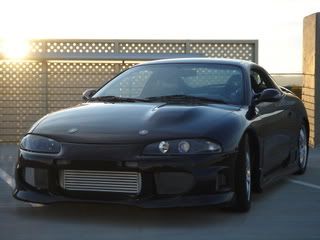
98 RS Turbo: 10.87 @ 136 MPH
HRC Stage V with N20
Nation's Fastest Street FWD 2G DSM
www.turbosystem.com
|

 Search
 Printer-friendly copy
 0 Users in Chat