|
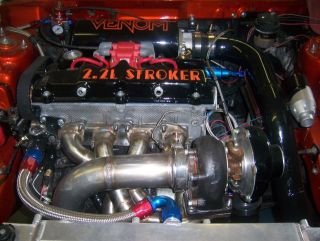
So, after rebuilding my engine and installing everything, i put the head on, bolted it down, and started doing the usual BS, needed to get my car running.
Well, that got me thinking about cams and cams profiles, valves and valve sizes... and on and on it goes.
I've noticed several times that the profiles for our cars require a different setup for exhaust and intake. ie the profile is different for each one. Why is that? i know that our exhaust valves are smaller than our intake valves and that exhaust gases are slightly different in form because of their "heated" nature. I also know about the gas laws and how gas has different "fluidit" and so forth. I'm wondering cause if the exhaust valve is already smaller, then shouldn't that take care of the gas temp difference already, right, and theres should be no need for a differnt cam profile? So why should the exhaust cam be different too? Does the exhaust gas really exit that much faster? My brain tells me its something to do with port sizes.
Basically, i'm lookin for a shakedown/crash course in cams for our cars. I've wondered for a while why they make such things as stage one N/A cams or the turbo grinds, when evertime i read something on them, someone says to just skip to a stag 2 N/A cam or equivilent. I know N/A cams are more aggresive because of what an N/A motor is trying to accomplish but why do shops make those other cam sets if they don't provide any significant gain?
Power is basically made through improving and engines efficiency at consuming/effecting and air fuel mixture, so what the heck is wrong with our engine to require an N/A cam...or are the manufactures the dumb ones? just wondering. 
All postitions, theories, hypothesis, and ideas welcome.
I love my car...
I love Horsepower...
I love reliability...
So why do i own a DSM again?

|

 Search
 Printer-friendly copy
 1 User in Chat